
Beruru redefines outdoor living through experiential retail
By Chanda Kumar | January 02, 2026
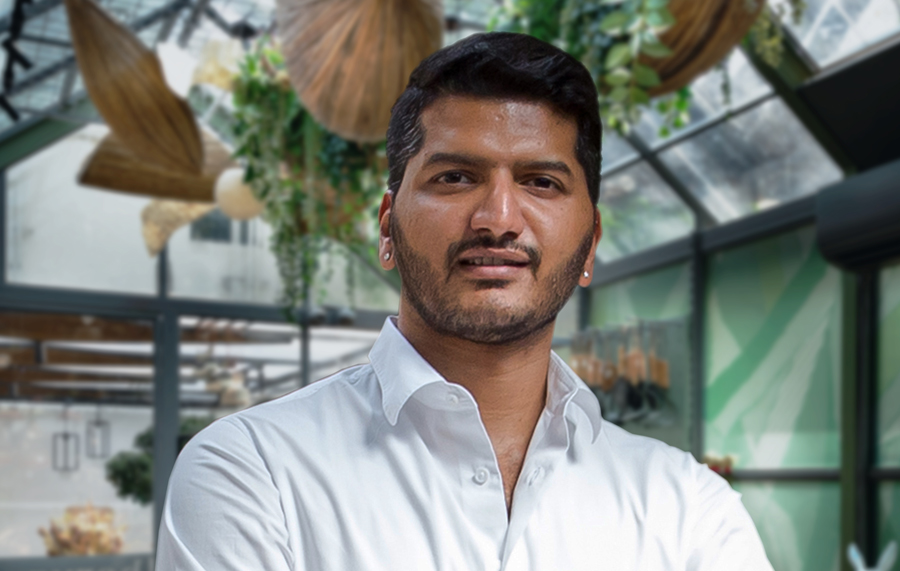
Radeesh Shetty, Founder of Beruru, a garden lifestyle brand, talks about the brand’s experiential stores, where customers engage with a seamless root-to-roof product and service mix, and explains what it takes to create immersive outdoor and garden retail spaces.
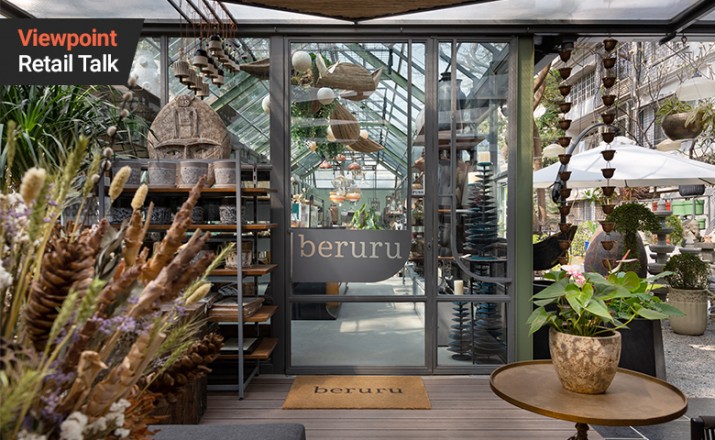
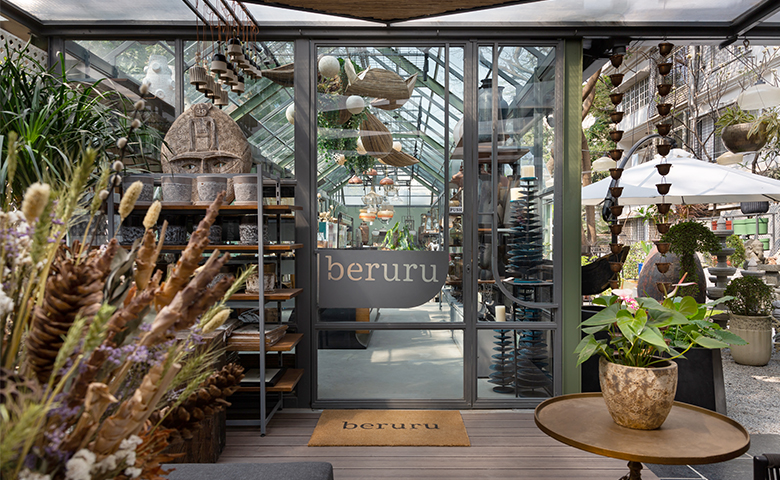
Inspired by the Kannada words beru (roots) and uru (city), Beruru is a garden lifestyle brand rooted in the idea that no space is too small to go green. Catering to the growing demand among urban dwellers to reconnect with nature, Beruru’s offerings are designed to suit diverse budgets and spaces, making greenery accessible to city homes of all sizes.
Beruru currently operates experience stores across four prime locations in India, with expansion underway. Its flagship stores are located in Indiranagar and Lavelle Road, Bengaluru, along with a recently opened store at the Mall of Asia. The brand also has a presence in Hyderabad, Chennai, and is set to open in Goa shortly - bringing its garden lifestyle experience to a wider audience.
Speaking exclusively to Retail4Growth, Beruru’s founder Radeesh Shetty, who is also the creative force behind The Purple Turtles, Oorjaa, and Artitude, shares insights into the growing outdoor living category. He highlights the brand’s experiential stores, where customers engage with a seamless root-to-roof product and service mix, community-building initiatives, and what it takes to create immersive outdoor and garden retail spaces.
Traditionally in India, outdoor living has existed in fragmented sub-categories such as plant nurseries, planters & pots, décor, outdoor furniture, pergolas, etc. What prompted Beruru to bring all of these together under one integrated store concept?
So, outdoor living as a category in India is in a very nascent stage. Beruru was born with the insight that outdoor living should be experienced like how interior decor is being experienced today. We started off by talking to a lot of interior designers and individuals to understand their needs. Since we interact so heavily with the design community, the insights for the brand did come from them, discovering the gaps in the outdoor living space.
Traditionally customer experience is extremely fragmented because you have to visit multiple places to put together a cohesive outdoor look. For instance, we wanted to have a space where people come and buy planters alongside plants, not a store where you pick up a pot and then go looking for a plant. And while you are browsing for your garden you also discover furniture, sculptures and more. The idea was to make sure that everything was available in one place, allowing customers to visualise the complete picture of an outdoor space.
With such a wide mix of outdoor categories and experiences, what principles guided your store experience & navigation from entry to checkout?
The idea was to make the journey feel more intuitive and exploratory, rather than purely transactional. At Beruru, we wanted people to wander, discover the curated range, and then come back to what caught their attention. We’ve seen customers spend hours in the store, taking their time and engaging with the space. So we set out to create an experience built around moods and looks, which helps people engage with and visualise outdoor living as a complete, holistic offering.
Beruru stores appear to be organised more around looks and lifestyles rather than strict product categories. How do you seamlessly bring diverse categories together to make shopping intuitive?
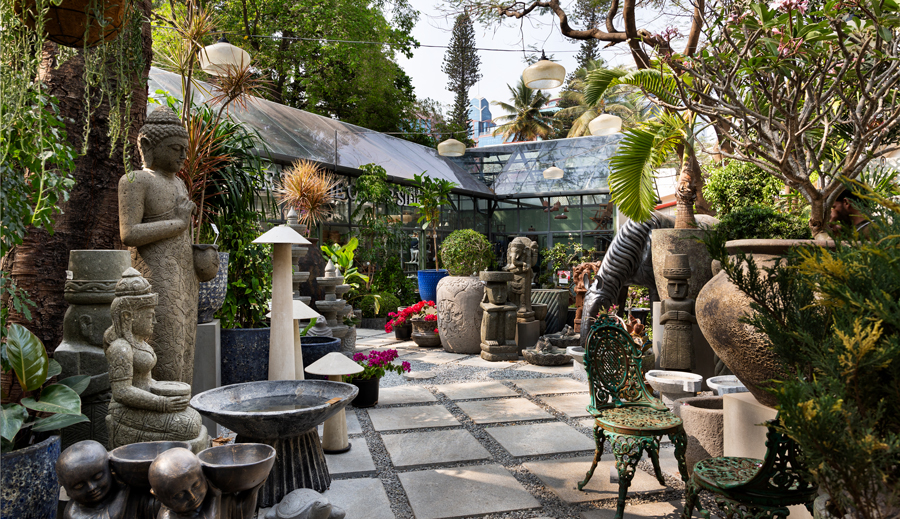
We offer a wide range of products, from small gifting pieces to larger statement items like furniture, fountains, and sculptures. Because of this, our customers span a broad spectrum, from casual browsers to serious buyers. Often, people walk in with a clear objective, but end up discovering more than what they walked in for.
Our curated displays allow customers to imagine how a setting might come together in their own home. In fact, many of them go on to buy an entire setup for their terrace or balcony.
And for those who come in with a specific purchase, our sales team steps in to guide them on everything from selection and product specifications to customization and final fulfilment.
Outdoor living is a highly community-driven category. How does the Beruru store connect and engage with its customers?
We have complementary brands within the store, for instance the Indiranagar store has a flower shop, a coffee shop, and a plant store that come together very organically. Their communities overlap as well; for example, the coffee community often includes people who also enjoy gardening and outdoor living as a whole. We’ve seen a strong crossover there.
We also have a beautiful flower shop in the space called Ohana, and there’s a natural synergy where many customers come in to pick up vases or unique pieces and then work with Ohana to create floral arrangements. For me, this sense of community isn’t built by our brand alone, but through the brands we collaborate with.
Beyond that, we regularly host workshops on plant care, coffee tasting, and more. These experiences help keep our clientele engaged and strengthen the community we’re building around the space.
Are you leveraging any technology to educate customers, assist decision-making, or enhance product storytelling?
We’re seeing video-assisted shopping grow, especially when customers already have a relationship with our staff. Often, they’ll simply share their requirements over a call, then the team understands the brief, notes the specifications, and shows them relevant options. Many customers prefer this to making a trip to the store, particularly when they’re buying gifts. Since a lot of our staff has been with us from the beginning, there’s a strong sense of trust and rapport with long-standing clients.
In our early years, especially when we were pitching more styling projects, we experimented extensively with augmented reality. We used it to place our products into clients’ spaces and help them visualise how the furniture would look.
Today, with AI, that approach has become far more seamless. It’s incredibly easy to take a photo, drop the furniture into the space, and share it instantly. As part of our styling process, we now rely heavily on AI as it’s faster, almost live, and can be used in real time while you’re chatting with the client, making the entire experience far more intuitive.
How equipped are your vendors when it comes to specialised requirements such as fixturing, watering systems, and store-ready solutions? What challenges have you faced while opening stores in newer locations?
We do have a very strong vendor base in India. While quality can sometimes vary, it’s largely dependent on the budget you’re willing to invest. As retailers, we often operate within tight capital budgets and need to be mindful of costs.
So, if you’re willing to spend appropriately, there are some excellent vendors in India. I feel that bridge has definitely been crossed and we’re now at a place where we’re able to create and deliver high-quality work locally.
What are your offline retail expansion plans in terms of new geographies, store sizes, or formats? Are products & services likely to evolve as you scale?
We currently have five stores, with our sixth opening in Goa. We’re present in Bangalore, Chennai, and Hyderabad. We recently opened at Mall of Asia, which marks our first mall-format store. Interestingly, the mall format saves a lot of time and effort on marketing, since you have a captive audience, people who come in with the intent to explore brands. This has been our first foray into malls, and it’s been a valuable learning experience.
Going forward, we’re definitely focused on metros. We want to be present across all major cities including Mumbai, Kolkata, and Delhi. We’re also exploring partnerships in other markets. Ahmedabad, for instance, is a very promising city for us. In Kochi, we’ve already partnered in a shop-in-shop format with the furniture brand Magari.
Overall, our goal is to increase access. What we’ve realised is that once people experience the product once or twice, they’re comfortable moving to video consultations and then browsing or purchasing online.
How do you see the outdoor living category evolving within Indian retail over the next few years?
If you look at today’s residential developments, there’s almost always a large balcony or terrace built into the plan. That clearly signals a growing demand that will only continue to rise. While this may still feel like a niche category, urban homeowners are increasingly valuing balconies, terraces, and courtyards, investing in them both emotionally and financially.
These spaces have become essential for quiet time and everyday living. In many homes, they function as extensions of the living room or bedroom, also a garden-like retreat where the family naturally gathers.
That’s why building and designing these anchor spaces is so important. They hold immense potential and will only become more central to how urban homes are experienced in the years to come.







Comments