
How The Bear House counts on online data to drive its offline expansion
By Chanda Kumar | December 04, 2025
In conversation with Retail4Growth, Harsh Somaiya, Co-Founder, The Bear House also called ‘Mr Bear’ shares insights on the seamless integration of online and offline retail touchpoints, the importance of store experience and the growing demand the brand is witnessing from Tier 2 and Tier 3 markets.
A fashion brand crafted for the new generation of modern young gentlemen, The Bear House draws inspiration from the bear that balances a calm, grounded demeanor along with strength and bold character. Born as a digital-native brand in 2017, Bengaluru-based The Bear House ventured into offline retail in March 2025 with its first store at Bharitya Mall, Bangalore and has since expanded across Hyderabad, Pune, Chandigarh, Indore, Chennai and Delhi, while also making its international debut in Dubai recently.
The brand raised INR 500 million in a Series A funding round led by JM Financial India Growth Fund III in April 2025, to expand its offline retail presence, support working capital requirements, and enhance branding and marketing initiatives.
With a strong e-commerce presence, The Bear House now plans to scale further across India to reach 60 stores by the next fiscal and open six stores internationally. In conversation with Retail4Growth, Harsh Somaiya, Co-Founder, The Bear House also called ‘Mr Bear’ shares insights on what it takes to stand out and stay relevant in India’s evolving menswear landscape, the seamless integration of online and offline retail touchpoints, the importance of store experience and the growing demand the brand is witnessing from Tier 2 and Tier 3 markets.
How does The Bear House differentiate itself from its peers?
I think what we’re trying to do differently is bring true European sense of fashion to India. My journey started with running a garment factory for six years, producing for brands like Zara, Marks & Spencer, and Mango. So I already understood the technical side and capabilities needed to build world-class products. When I got married, my wife and co-founder Tanvi Somaiya pointed out that with all this knowledge of how European brands operate, why shouldn’t we build an Indian brand that feels international but is designed for the Indian consumer? That’s how The Bear House was born, with the idea of bringing European minimalist fashion sensibilities to India and introducing a category that barely existed back in 2017–18. At that time, there were hardly any brands focusing on semi-formal clothing or promoting an untucked, relaxed style of dressing.
Gen Z today wants comfort, confidence, and clothing that suits their lifestyle. Our brand sets that tone by dressing the young gentleman in a relaxed, minimal, and elevated way that feels modern and European.
What’s missing in the market today is a premium-accessible offering for everyday wear, and that’s where we position ourselves.
Can you walk us through your offline footprint today and your expansion going forward?
We began our offline journey this year, and we are currently at 16 stores. We recently launched a store in Faridabad, as well as an international location in Dubai, with Abu Dhabi scheduled to open soon. Internationally, we plan to open six stores, and overall we are targeting a total of around 60 stores next year, with 25 stores in the current fiscal year and approximately 30–35 in the next. For now, we are keeping all stores company-owned and company-operated, because as a digitally native brand, our customers expect a certain standard of experience and consistency that we want to control closely in the early phase of our retail expansion. However, as we scale and expand deeper into Tier 2 and Tier 3 cities, that’s where strong local partners can add real value. So we will explore franchise opportunities in the near future.
Additionally, we are currently present in 125–130 shop-in-shops across MBOs, and we plan to expand to another 100 touchpoints soon.
Are emerging Tier 2 and Tier 3 cities the future of offline growth for The Bear House?
Being a digitally native brand for over five years has given us a deep understanding of our customers, where they are located and which pincodes show the strongest demand. Our online heat maps clearly indicate where to expand next, making decision-making far more strategic. When we already know that a locality has 5,000 existing customers, entering that market becomes a no-brainer. It allows us to negotiate better rentals, choose prime locations, and open stores with confidence, making expansion far more economical and scalable for a young brand like ours.
Interesting, when we evaluated the North, Sector 17 in Chandigarh, the fashion hub emerged strongly in our data. We already had a good customer base there, so opening a store was a natural decision and it has been performing exceptionally well.
Our strategy is a balanced mix, where metros are critical for building brand visibility, however they are often crowded and expensive. Tier 2 & 3 cities offer strong potential with favorable economics. So we are expanding with a blend of key metros and high-opportunity Tier 2–3 markets and so far, that approach is working very well for us.
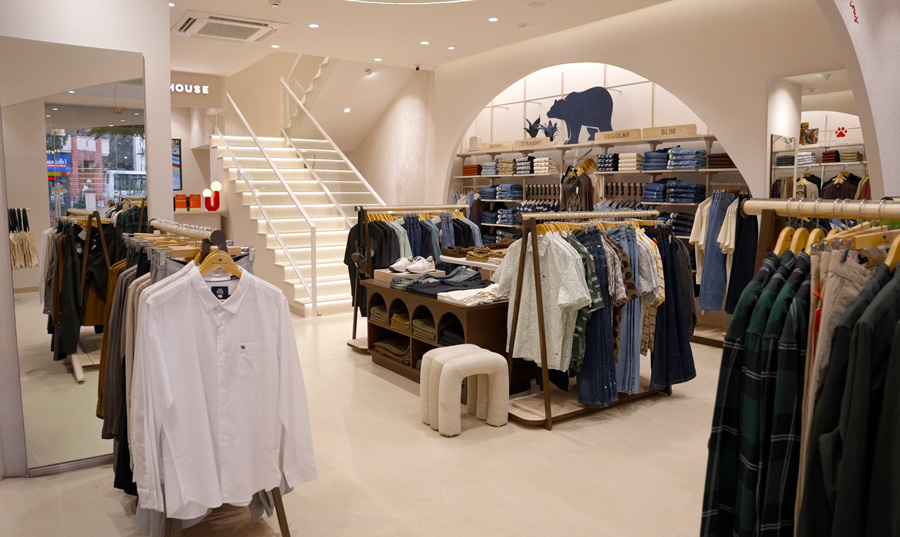
How does the brand’s philosophy and narrative reflect in the store experience?
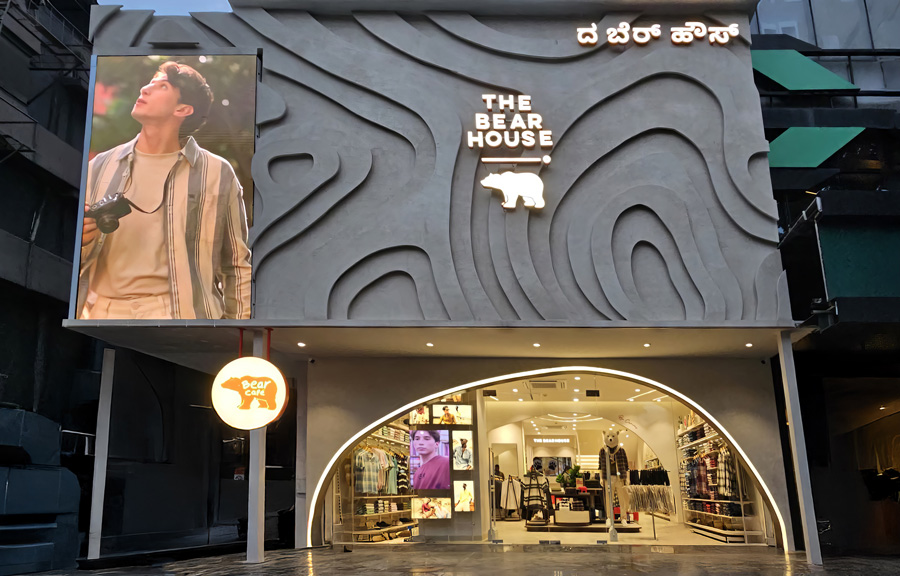
The vision for our retail space came from the very essence of the brand - The Bear House. From day one, we were clear that we wanted a cave-like environment and an entrance that evokes the feeling of a cave. That was the brief we gave our design team. We explored multiple concepts, but ultimately chose the cave structure and the moccasin color palette, which set us apart from the typical stark white stores in the menswear category.
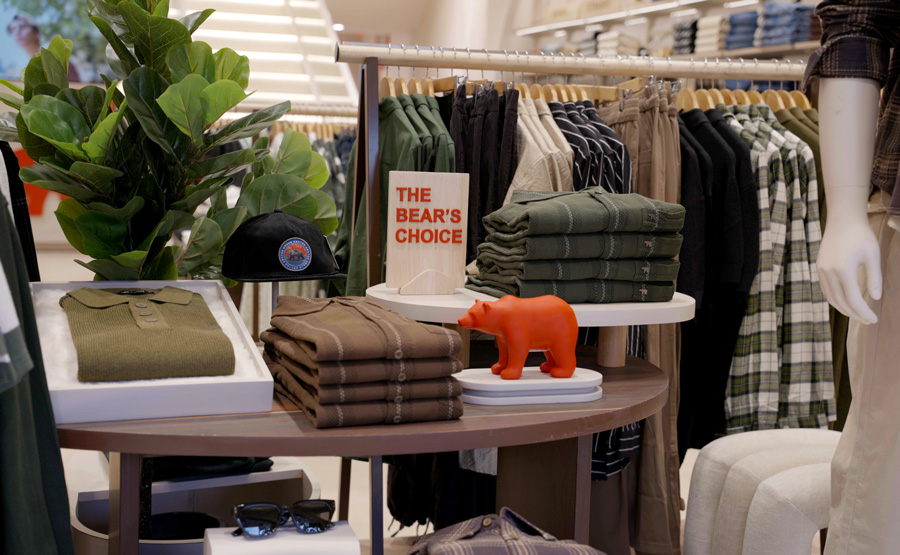
Designed by Restore, our award-winning store concept was envisioned as a space that reflects the brand’s raw yet elegant identity. The “bear” itself played a major role in the design process. We wanted an iconic element that people would instantly connect with, so we introduced the sculpted bear mannequins in the stores. Adding to this, the paw marked-details, bear forms as props has become a powerful visual merchandising narrative that naturally attracts attention and footfall.
Overall, our brief was simple: create a space that feels relaxed, unhurried, and experiential—not a pushy retail environment. A store that smells and feels earthy, and delivers a sense of calm. And I think we’ve achieved exactly that.
How have you incorporated technology to elevate customer experience at the store level?
When it comes to our stores, the goal is to offer customers the full brand experience. We’ve enabled the endless aisle technology, so even if we display only 8–10 seasonal options of a polo t-shirt in the store, customers can browse all 40 variants on an iPad and place an order instantly. We are fully omnichannel-enabled, customers can order through our website or in-store and receive delivery within 2–3 hours. We are on quick commerce platforms and other fashion marketplaces too. The focus is to ensure fast fulfilment and a unified, convenient experience across every touchpoint. In the future, we would like to install an AI mirror which could help you browse through catalogs in the trial room.
How do you ensure your stores stay fresh and engaging for shoppers?
With every new store launch, we plan strong engagement activities with the TG for the first three months to build awareness and connect with the local audience. In terms of product freshness, we cycle inventory every 45 days. So, at 15 days customers see some new merchandise, at 30 days about half the store changes, and by 45 days almost 80% of the assortment is refreshed. So when a customer returns after 45 days, the store feels completely new.
This aligns with our online approach, where we drop 50-300 new styles a month and around 8-10 new products daily. Our goal is to ensure that the same pace of fashion and freshness is reflected in our offline stores as well.






Comments