
Aptronix puts customer experience at the heart of its retail strategy
By Chanda Kumar | June 09, 2026
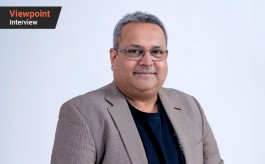
Speaking to Retail4Growth, Meghna Singh, CEO, Aptronix, shares how the brand is redefining what it means to be an Apple Premium Reseller in a fast-evolving market, while expanding its regional footprint and working towards the milestone of 100 stores.


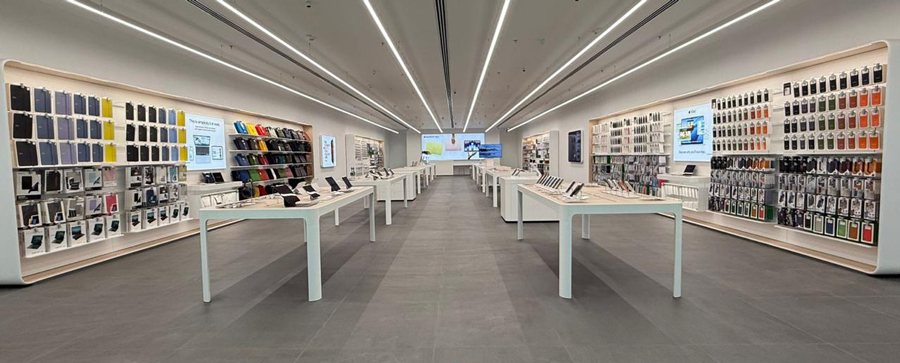
With the vision of creating the most exceptional Apple retail experience in India, Aptronix focuses on immersive in-store environments, customer-first programmes, and premium service standards. Continuing to set the benchmark for technology retail in the country, the brand recently opened its largest store in India - an expansive 8,000 sq ft flagship at Sarath City Capital Mall, Hyderabad. Speaking to Retail4Growth, Meghna Singh, CEO, Aptronix, shares how the brand is redefining what it means to be an Apple Premium Reseller in a fast-evolving market, while expanding its regional footprint and working towards the milestone of 100 stores.
Can you give us an overview of Aptronix and its presence in India?
We are part of a larger retail group - Premium Lifestyle & Fashion India Private Limited (PLFIPL), that works with 30+ brands ranging from international names like Apple, Dyson, Calvin Klein, Mango, Shantanu & Nikhil to homegrown brands like Fabindia, Jaypore and Tasva. Aptronix is India’s leading Apple Premium Reseller, operating across multiple cities with a commitment to delivering world-class Apple retail experiences. We started 12 years ago in Hyderabad, then expanded to Vizag and Mumbai, and today we're in 24 cities with 70 stores and 18 service centres.
What is driving growth for Aptronix in India?
Apple has significantly increased its focus on India, where products now launch on the same day as worldwide, and marketing campaigns are on par with global standards. The market penetration of Apple in India is still quite low, so the opportunity is massive and not just from existing Apple users upgrading, but from people switching from Android and Windows. Our strategy over the last few years has been to expand into tier 2, 3 & 4 cities, where we're seeing excellent growth and profitability from day one. We have about 20 stores in these regions, and they're doing very well. They are crossing our business case projections and are profitable from day one, which is unusual since stores typically need a gestation period.
Because India is such a vast and complex market, it isn't practically possible for one or two partners to cover it all. That's why Apple introduced the concept of mono-brand partners like Aptronix, spread across different parts of the country.
With Apple products available everywhere, including online store, marketplaces, EBOs & MBOs, what makes Aptronix stand out?
The market right now starts and ends at a discount, where retailers and consumers alike are comfortable with that. But we see a fundamental gap, where no one is really focused on connecting consumers with the Apple ecosystem in a meaningful way.
At Aptronix, our entire philosophy is that we want to obsess about customer experience, not sales targets. Yes, offers and discounts matter, and we don't ignore them, but we focus on creating value in a customer's life beyond the transaction.
Can you give an example of that kind of initiative?
One is our Limitless Exchange program. The traditional trade-in process was complicated and restrictive, which involved one device for one Apple product. We changed that entirely. Customers can now bring in up to 10 products in any condition, any brand, dead devices, household appliances like microwaves and TVs to receive value toward any Apple product. Why should someone with three old iPhones only be able to exchange one? And why only for an iPhone? Why not for AirPods or an Apple Watch?
The program also has an environmental angle: when a customer brings in a dead device, we plant a tree in their name with a geotagged location they can track. This resonates with consumers who are conscious about sustainability, and it's been a genuine differentiator. When we ran it as a one-month pilot, we saw a 27% increase in footfall, and that increase continued beyond the pilot period.
Apple stores have a lot of in-store community workshops and creator events. Does Aptronix do something similar?
We do run workshops, but honestly, nobody does it as well as Apple. Their Genius Bar, the creators and speakers they bring in — that is a core KPI for them, and they execute it at a level we can't match. So rather than try to replicate that, we focus our energy on what we do well.
Our community-building looks different. Right now, for example, we're heavily invested in creating a student community. It goes well beyond a "back to school" offer. Students get exclusive loyalty points, referrals, a complete solution tied to their product, such as exclusive benefits on service, accessories, and future purchases — vouchers for upskilling courses. The idea is to make a real impact, and when students see that, they trust the brand and stay.
What's the most interesting shift you've noticed in customer behaviour?
The biggest one is that the assumptions most of the industry still holds about Indian consumers are outdated. The image of the price-obsessed Indian consumer is still driving strategy in 2026, and it's not accurate. Today's consumers seek value. They want their lives made easier. If you can genuinely do that, they respond.
Nobody in this industry is even having that conversation with customers. No one is saying, "Here's what we can do for you beyond the discount." We're trying to change that.
Do you use any in-store intelligence or data tools?
Yes. We have a footfall mapping system that tracks not just overall footfall but heat zones, like which tables customers spend the most time at, and which products get the most attention. We also have a CRM deeply integrated with AI, which segments consumers into cohorts based on purchase patterns such as what they buy, when they buy, and at what intervals. This determines the best times to reach out to each segment.
It's an end-to-end tracking system covering everything from when we send a communication to when a customer walks into a store. On top of that, we use AI tools that analyse customer conversations and surface insights — not the actual conversations, but behavioural patterns. AI is now a necessary part of every department, and we're making sure we keep up.
What is Aptronix's expansion strategy going forward?
We want to be in every region and be everyone's trusted go-to Apple retailer. Our immediate milestone is 100 stores. Beyond that, store count becomes just a number, where the goal is to be India's leading Apple reseller in volume, value, and presence.
Right now, the one gap in our geography is East India, which is an immediate focus area. Beyond that, we go where there's a white space or a clear market opportunity.
What are your typical store formats and sizes?
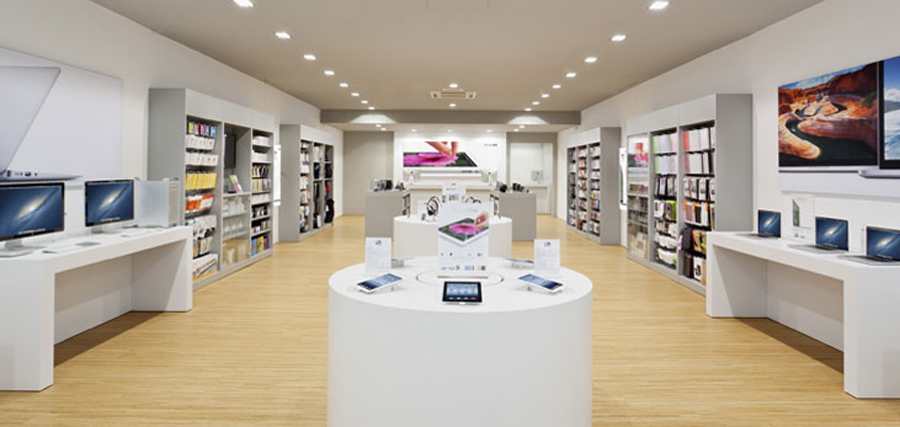
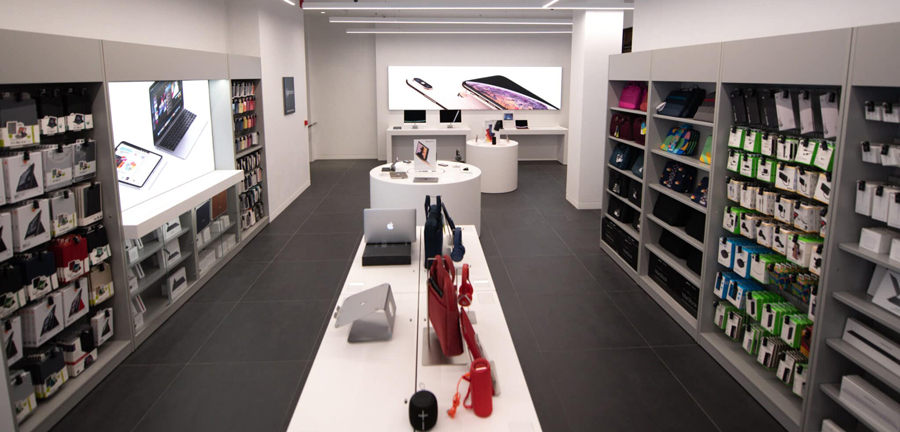
There are two formats. APP stores, typically in tier one locations with high footfall, are a minimum of 2,000 sq ft, with our largest recently opened store is 8,000 sq ft. Mono stores in smaller cities are smaller format, typically 1,000-1,500 sq ft. About 40% of our stores are in malls. Mall culture in India is significant and here to stay — high footfall means high conversion.
What's the biggest challenge in opening new stores?
Finding the right location is a challenge. As for the civil work, fixtures, and lighting, Apple has fixed vendors and strict quality standards, which is sometimes painful but ultimately the best kind of discipline. We've got the execution process down.
What makes or breaks a store is whether you've found the right catchment area and the right property within it — the right store dimensions, the right neighbouring tenants. You can identify the right catchment and still not find the right space within it.





Comments