
Rangita's retail strategy to get value ethnic wear right
By Chanda Kumar | June 08, 2026
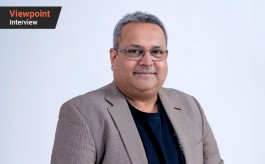
In conversation with Retail4Growth, Himanshu Chakrawarti, CEO, Stellaro Brands talks about building a value ethnic wear brand from scratch, the rigour behind store expansion, and why integrated retail solutions remain the market's biggest unsolved problem.
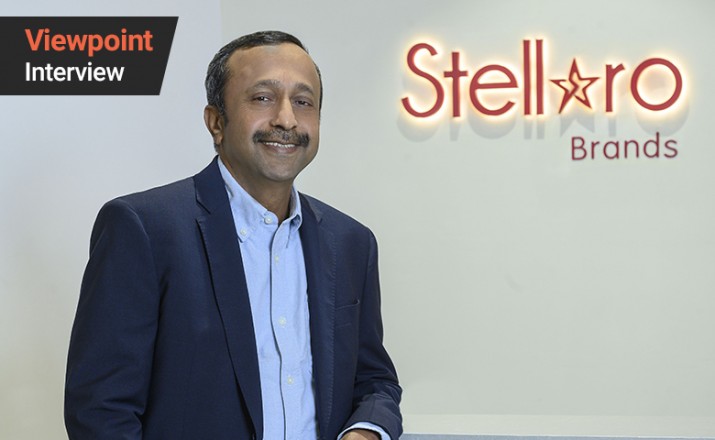
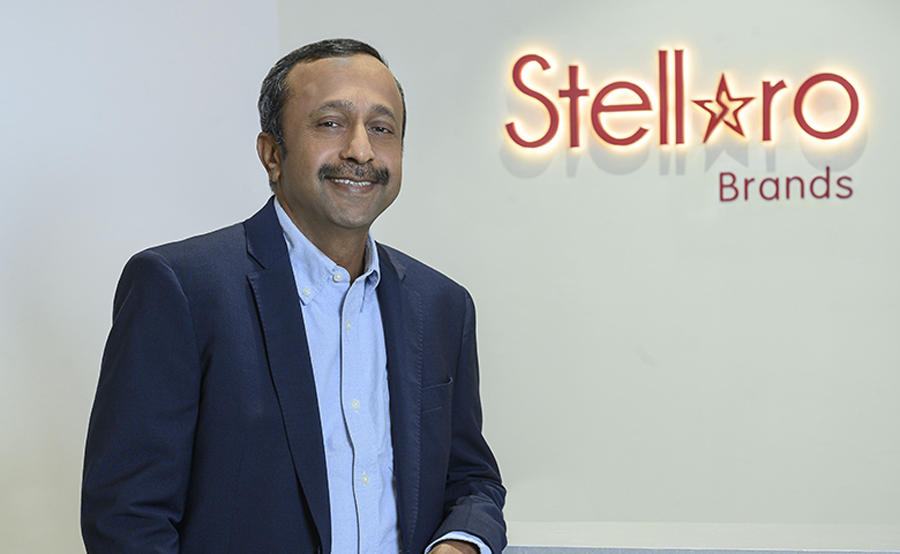
India's ethnic wear market is large, fragmented, and long dominated by unorganised local retail. As organised players move in, the real play is now being seen in the value segment, where quality, consistency, and brand trust have been largely absent. Stellaro Brands is betting that this is precisely where the next big retail story will be written, through its ethnic wear brand Rangita. In conversation with Retail4Growth, Himanshu Chakrawarti, CEO, Stellaro Brands talks about building a value ethnic wear brand from scratch, the rigour behind store expansion, and why integrated retail solutions remain the market's biggest unsolved problem.
As organised retail in ethnic wear grows rapidly in India, what specific market gap does Rangita address?
In the mid-premium ethnic space, you have brands such as W and Aurelia, while at the premium end, there are Soch and Biba. But in the value segment, we have no national ethnic wear brands that are equivalent to a Zudio or VMart in terms of price, except for Go Colours, which covers only bottom-wear.
So, consumers are buying ethnic wear from local, unbranded, or unorganised shops. The merchandise is available, but either at 1.5–2x the price (at mid-premium brands), or at places where quality is inconsistent, including fabrics that shrink, bleed, or don't hold up. That's the gap Rangita was built to address.
How did you go about launching and validating the concept?
We launched our first two stores about two-and-a-half years ago in Coastal Andhra — one in Gajuwaka and one in Kakinada. And both did well. We waited six to seven months before drawing conclusions, then launched two more experimental stores - one in Kurnool and one in Attapur, Hyderabad. Those also worked, but again it took six to eight months to assess them properly.
So roughly 14–15 months of testing before we were confident in the formula. From May 2025, we began scaling and now have 18 stores, with the 19th one launching soon. In the last two-and-a-half months alone, we've opened three stores in Bangalore, in well-known malls like Mantri Square Mall and RMZ Galleria Mall, and all have performed very well. Our first store in Chennai on OMR will launch soon.
What makes Rangita stand out from others in the offline space?
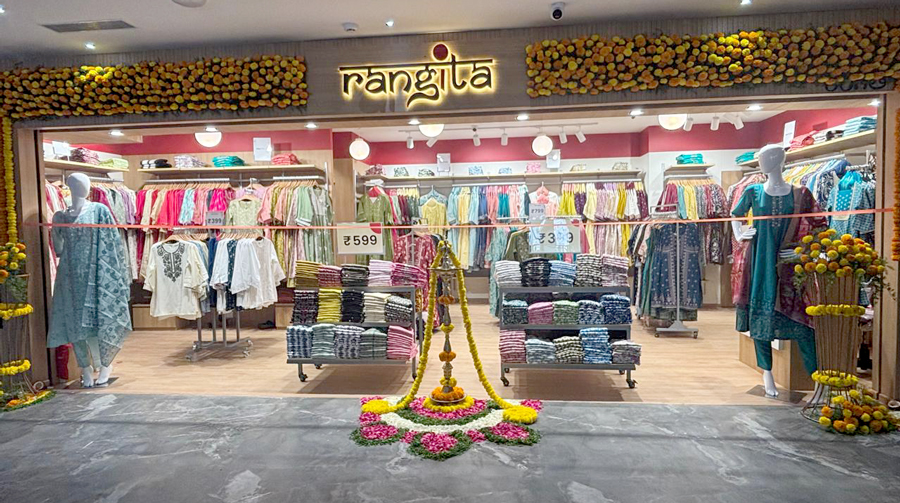
The in-store experience is very upmarket for the price point. Good mall locations, store interiors, and strong visual merchandising give a premium feel that you wouldn't expect at these prices. Think of it as the Primark model in the UK, or what Zudio does in India. The customer gets a great experience without paying a premium price.
You're often in the same malls as large-format value chains like Zudio or Max. How do you see that dynamic?
We see it as an advantage, not competition. We select store locations based on this criterion, as these formats draw in the desired customer base for Rangita as well.
However, ethnic wear may not be the strongest category for these large-format retailers. Women know this, which is why they often seek out dedicated ethnic stores. Until now, those stores have mostly been local or unknown. We offer a branded, quality-assured, well-displayed alternative at the same price point. So we're tapping into existing footfall rather than fighting for it.
What's the contribution of physical retail vs. online, and how does the omnichannel model work?
A year ago, we were at 4 stores, and today we have a store count of 18. So the ratio is naturally tilting towards offline retail as we scale. But omnichannel isn't just about the revenue split — it works across four dimensions for us:
- Fulfilment: Online orders are algorithmically allocated to the nearest store rather than defaulting to our Hyderabad warehouse. Stores effectively serve as dark stores for faster delivery.
- Marketing: We combine the online and retail customer databases and run cohort-based, one-on-one marketing campaigns across both.
- Store location decisions: Online pin code data tells us where demand exists before we commit to a new store location.
- Brand stickiness: We actively guide online customers to visit nearby stores. A customer who physically experiences the brand has significantly higher recall and loyalty than a pure online buyer.
The next step will be enabling in-store customers to browse the full digital catalogue across all stores and the warehouse and eventually facilitating online exchanges through nearby stores.
What are your expansion plans — geographies, formats, tier 2/3 cities?
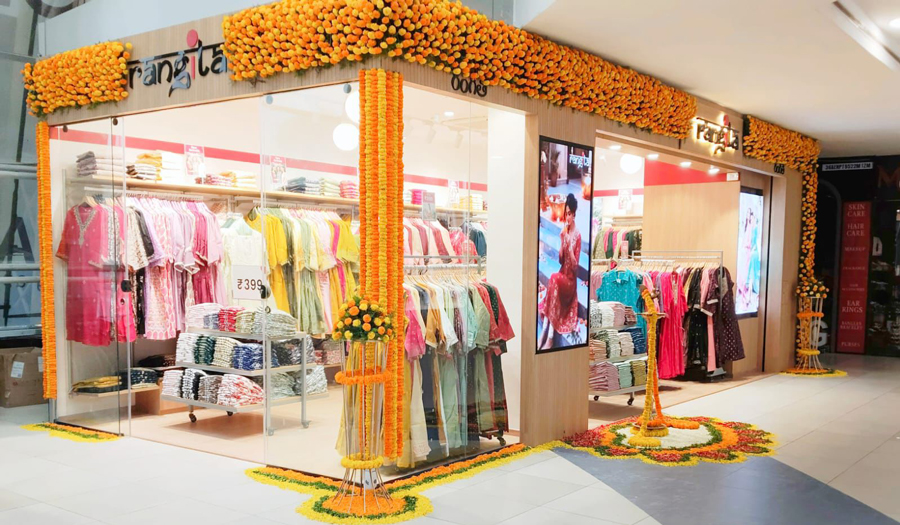
Our approach to offline retail is a cluster-based expansion. We don't do traditional advertising, so the storefront itself is our primary brand signal. The more stores we have in a cluster, the stronger the recall. We started with Coastal Andhra, moved to Hyderabad and Telangana, then seeded Bangalore. Chennai is next, and from there Tamil Nadu — which has an outstanding density of large cities like Salem, Madurai, Coimbatore, Thirunelveli, and many more.
We're not committing to specific store counts in advance. We test, assess, then expand. There's no point signing up 10–15 stores and discovering the formula doesn't translate. On geography, we're focused on the South for now, partly because the colour palette is broadly consistent across southern states with minor variations, and the seasonal extremes are less intense, which reduces merchandise complexity.
What's next for Rangita in terms of sub-brands or new categories?
We've experimented and learned. Sarees didn't work and are no longer in stores. Standalone bottom-wear also didn't hold up and has been removed.
Gen Z is a strong opportunity, where the customer wants western silhouettes with ethnic motifs - a very distinct aesthetic. We've launched a dedicated Gen Z section in our Mantri and RMZ stores, complete with selfie zones, distinct wall displays, and mirrors styled for that audience. It's early, but the response is promising. We're also evaluating extended sizing - 5XL through 7XL - a big underserved opportunity.
As for the revenues and growth numbers, we're in the process of filing for an IPO, so I'm not able to share specific financials at this stage.
What is the single biggest challenge in store build and retail execution?
The golden metric is sales per square foot per day (or per month). Other parameters such as margins, inventory velocity and markdown frequency flow from that one number. Margins are largely locked in once you fix your price architecture. What moves significantly is sales per square foot.
The challenge is that no solution provider addresses this holistically. Visual merchandising vendors optimise only visual merchandising. POS and omnichannel tech vendors solve only their piece. Store designers focus on aesthetics and adjacencies. Nobody sits across the whole equation and asks: should this store be 500 sq ft or 800 sq ft? Because at 800, your rent, CAM (Common Area Maintenance) and electricity go up 60%, you need to fill more floor with inventory, and if throughput doesn't match, you accumulate slow-moving stock and increase markdowns. That integrated, business-model-led solutioning simply doesn't exist in the market today. We end up buying individual solutions and solving it ourselves.





Comments