
"There is a demand for art-led storytelling in retail today”
By Himanshi Jain | May 06, 2026
In an exclusive conversation with Retail4Growth, Arjun Bahl, Co-Founder of Guerrilla Art and Design and St+art India Foundation, shares insights on their work at Galeries Lafayette Mumbai and the growing relevance of handcrafted storytelling in retail.
India is rich with its craft tradition as well as craftsmanship in the world, yet much of it is confined to its galleries and museum, with very little seen in public spaces and retail environments, too. It is only when a global brand, a luxury retailer, comes in and incorporates intricate handwork into the store design and experience that we take notice.
Retail4Growth connected with Arjun Bahl, Co-Founder of Guerrilla Art and Design and St+art India Foundation, to discuss the interesting work done for Galeries Lafayette - Mumbai, as well as why storytelling through handcrafted installations and retail experiences matters today.
Can you tell us a little about Guerrilla Art and Design and the kind of work you’ve been doing with retail clients?
It has been a long journey now. Guerrilla Art and Design was originally incorporated in 2013, founded by Hanif Kureishi, Rutva Trivedi and me. Unfortunately, we lost Hanif about a year and a half ago. But it was truly his vision to make an organisation which is a little underground and does bespoke work, and therefore the name Guerrilla.
The idea was that we would do things in a very different manner. We would work with space, materials, and do some branding as well. We didn’t want to be a typical agency model. In fact, the whole idea was that it should not even have a website, the client should be able to find us only if they really dig deep.
Our first client was SOCIAL, a bar, restaurant and co-working space. We worked very closely with Riyaaz Amlani and were concerned about what SOCIAL will be in terms of brand personality, how it communicates, logo systems, what it will do, what it won’t do, what the serveware looks like, how food is served, uniforms, and the spatial environment.
We wanted to be anti-design. We didn’t want to make the same space which everyone goes to, so we created our own design language. Every SOCIAL was different and took inspiration from its location. Today, there are 55+ outlets, of which around 40 have been done by us.
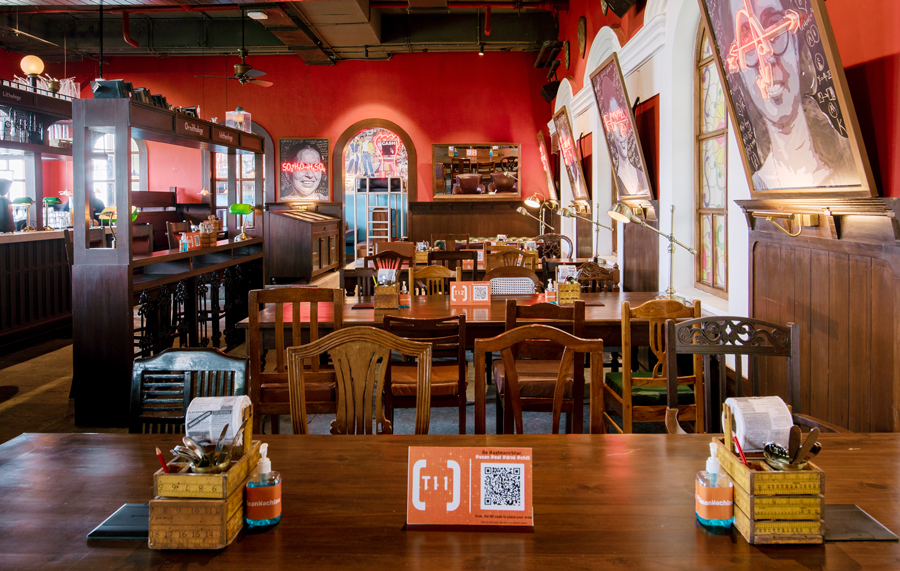
In hospitality retail, we’ve done almost 100+ restaurants. Another key project was Taco Bell, where we reworked the brand under new ownership and created handmade restaurants—nothing printed, everything done by hand. We did almost 60 restaurants and created a template called Urban Edge. We’ve also worked on brands like Blue Tokai, where we collaborated with indigenous art forms, commissioning artists and even potters to create installations like ceramic ceiling designs. Beyond that, we’ve worked with Apple for their first two stores in India, along with Nike, Under Armour, Ted Baker and others, across branding, retail experience and art-led projects.
Could you take us deeper into your work at Galeries Lafayette, Mumbai? What was the core concept, and how did it all come together to shape the overall store experience?
It was a collaborative project, where we worked with Siddhanta Sahu from Few Steps Ahead. We were given two spaces – one of the main entrance and then the elevators.
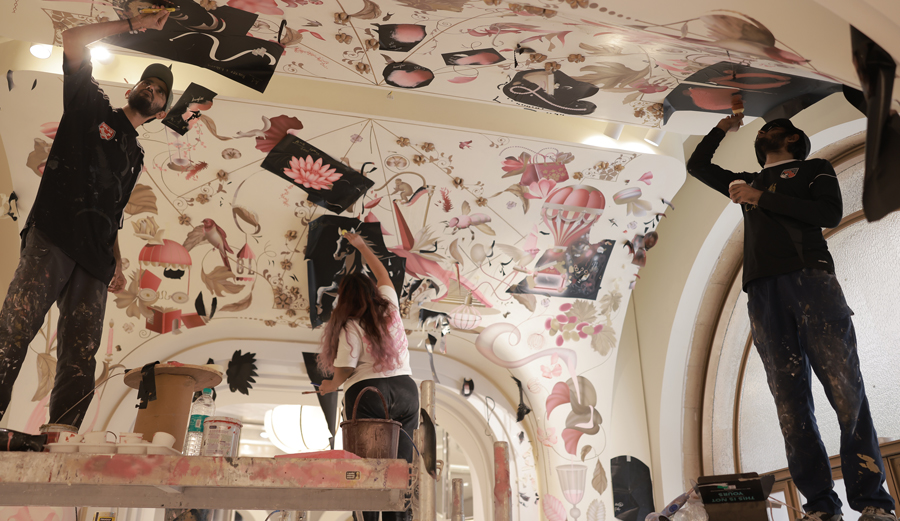
The idea was to bring Galeries Lafayette to India. While the scale is very different from Paris, we wanted to bring elements of it to the store in South Mumbai. When you go to the gallery in Paris, you see this beautiful dome from the Art Nouveau style of architecture. We took this conceptual inspiration for the entrance dome in Mumbai.
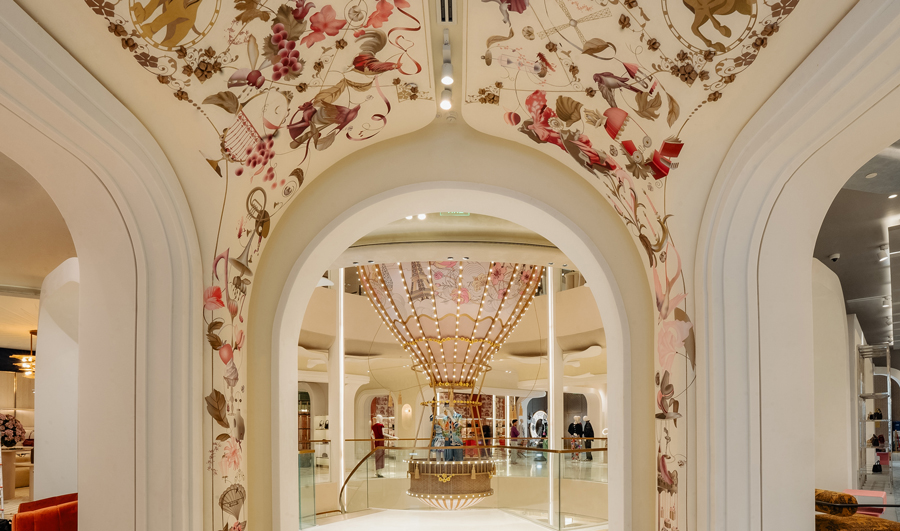
It was inspired by Parisian life – the arches, houses, lions, and fountains. We wanted to create delicate luxury, especially since this is the first entry point for visitors. The colour palette was important, where we worked with beiges, pinks and gold to bring these Parisian touchpoints together and create a unique experience.
The artwork was originally digital, but our teams worked on it completely by hand. It had textural sensitivity, and we had to test a lot while working against timelines. We used spray painting with multiple stencil layers—layer over layer to achieve one output. It was a very challenging and time-consuming process, and we underestimated the time it would take.
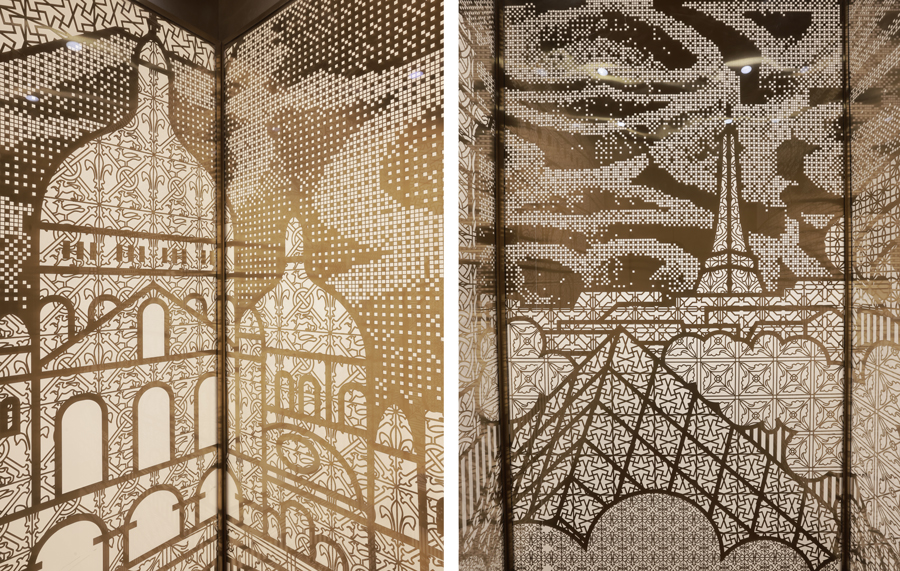
The second project was the elevators. The idea was to take visitors into the Parisian landscapes. We worked with patterns of formal gardens like Luxembourg and architectural silhouettes like Notre-Dame, Louvre, and Eiffel Tower. This was done using laser cutting custom sheets with a brass finish and backlighting. When you enter, the light brings out the textures and layering. So these were the two projects we did, from design to execution.
Do you see retail spaces embracing handcrafted installations to uplift the experience at the store?
For us, working with hand not only adds value to the project but also to an artist’s income, bringing in people who have been doing this traditionally for generations.
There has always been a combination of designer and painter. Earlier, there were Bollywood painters and sign painters for shops, but that went away because digital made it cheaper, where someone could sit on a computer and give ten variations in a minute at one-tenth the cost. But you can see that over the last decade, the work of hand is coming back. People want it, be it restaurants or traditional retail, because it looks better, it looks real.
With the growth in India and Indian retail, we are trying to create unique experiences. India has such rich art, culture, and craft, and we are trying to bring craft and contemporary together. Going forward, people will want something unique, and brands need to stand out.
Any project that you have worked on where sustainability has found its true sense?
We’ve done two projects. One was with Hidesign, where we worked on their main retail store in Pondicherry a few years ago. They use a vegetable tanning methodology – a natural dye made from a plant seed and a fully sustainable process. What we did was create a frame using these seeds, with the line “nature takes time.” We showed a young seed in a lighter colour transitioning to a darker seed, which is what finally happens in the tanning process. Today, you see this across all Hidesign stores.
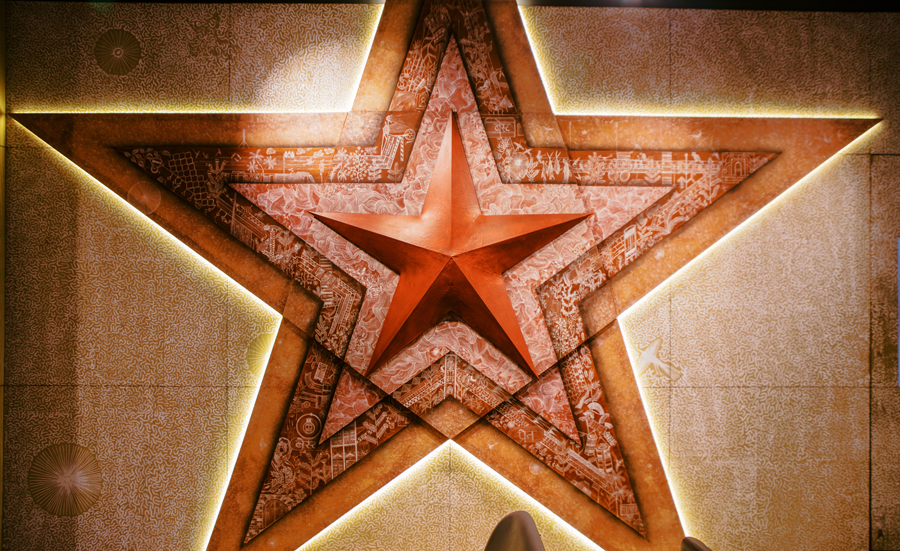
The second project was with Pret A Manger. Along with the global team, an adaptation of the “Emanating Star”, a central element of the Pret logo, was done with traditional Warli patterns and modern design elements representing Mumbai. What we did was first stain it with organic coffee and then worked with artists to create a modern version of Warli, bringing in elements like BEST buses, old bus stops, post boxes, things that remind you of Mumbai.
You’re also the Co-founder of St+art India Foundation and have recently completed the Lodhi Art District project. What is the joy of bringing art to public spaces and adding that layer to the urban landscape?
So, it’s been 13 years now. We’ve been running the foundation for a long time. Lodhi art district is very close to us. I am from Delhi, so I’m a little biased towards my own city. Lodhi is a very special space. It’s pedestrian-friendly, one of the few places where you won’t get run over. The walls are close to each other in a crisscross manner, so you can really feel the space, and it lends itself to a nice open-air art museum. There are about 60–66 works now, with almost 20 different nationalities. It has also become a place of soft diplomacy. We’ve had dignitaries like Pedro Sanchez, Mr. Macron, and Tim Cook visiting. It’s not gated, it’s free for everyone, and it’s pure art.
These kinds of projects are very important for the city and are possible only because of partners like Asian Paints, who have supported it for the last ten years. Bringing art to people is very important. We call it “art for all”—democratic in nature. We work with locals wherever we go. We now have seven art districts, with Lodhi being one of them. It’s been an amazing journey, and it continues. It’s a massive team effort – artists, volunteers – everyone makes it happen. It’s a district for all, not just for Delhi but for everyone who visits.
We are trying to see how cities can be made more for humans than for vehicles. We need spaces that are engaging, collaborative, and bring people together – and art does that.

Comments