
Will AI redefine shopper experience in 2026?
By N Jayalakshmi | December 30, 2025
If the last two years were all about the ‘aha’ moments for Generative AI, 2026 might be the test year as the excitement and the apprehension settle down into a more sober exploration of how AI can drive tangible business results. When it comes to shopper experience in physical retail, AI possibly has lot of ground to cover; and the coming year should be interesting to watch.
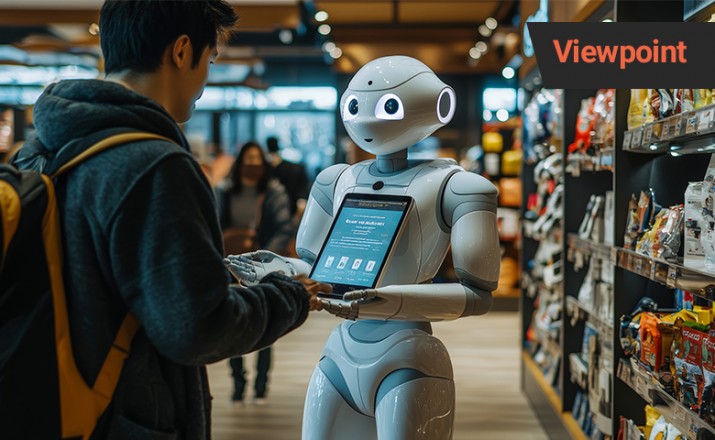
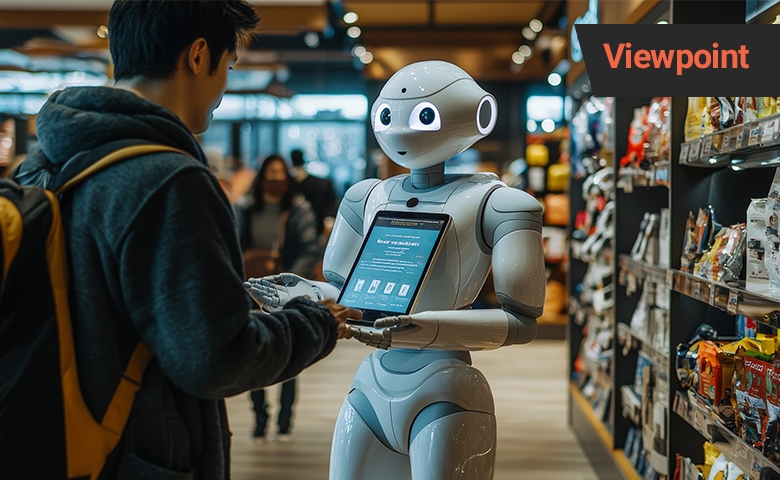
For those who anxiously believe that AI will take over retail jobs, setting the stage for a space where bots will help shoppers take informed decisions, here’s some reassuring stats from a Forbes report. The report cites a study conducted by Attest, which shows that only 27.3% of respondents believe AI can enhance the shopping experience, and only 26% believe it can lead to more personalized experiences.
“This skepticism stems from the perception that AI in retail is still in its early stages. So far, people aren’t seeing that it can provide tangible benefits to customers. Shoppers may still prefer human interaction and personalized service, something current AI doesn’t deliver,” says the report.
But it’s a different story in the online space of course.
Reportedly, 52% of survey respondents, said they would use a chatbox to get information from a company website. The report surmises that most consumers, especially millennials, see value in AI powered chatbots for information gathering and customer support enquiries.
It’s annoying when it’s bad and scary when it’s good!
Yet, the question remains: haven’t we all at some point of time been frustrated by the stubbornly templatized response of a chatbot? Haven’t we wanted to bang our heads against a robotic answer that cannot go beyond what it is programmed to do and address a unique query, specific to a unique situation? Well, all that will change soon, we are told. Machine learning is advancing so much that bots/robots will be able to think independently, claim the AI enthusiasts. In fact, the above survey report also suggests that shoppers worry about AI interactions that can’t be easily distinguished human ones with 83% of respondents believing all AI-generated content should be clearly labeled and 74.8% saying that the creation of deepfakes should be illegal.
This means that either way, there’s cause for concern for consumer facing businesses, when it comes to AI: good enough to spook, bad enough to put off.
AI in physical retail: A quiet force in the background?
It is possibly in the physical retail space that there’s a case to be built for best usage of AI – good enough in the background to enhance efficiency, and not quite out enough to drive away the customers. After all, we don’t want a robot to telling us that a shade darker would look good on us. Or do we? Well, that’s a debatable question.
But the point is that AI in the brick and mortar retail space is more about powering consumer facing touchpoints for better efficiency and customised engagements. While we may shirk from a walking metal greeting us, we sure might be excited by a screen greeting us, displaying just what we like or suggesting something apt to top up our purchases. This is one of the reasons, the Chief Data Officer is increasingly becoming an important role in the retail scheme of things. Of course, central to this would be the question of data privacy and compliance with data privacy regulations- still a complex and grey area.
But one thing is clear: AI will certainly get closer to redefining shopper experience in the year to come. While logistics, supply chain management, customer relationship management, etc., are all already being driven by AI at the back-end, front-end retail too should see some vibrant changes with AI. Cutting edge digital signage, omnichannel in-store kiosks, dynamic trial tools (a smarter mirror may be?), smart VM tools for more engaging merchandising, are among the many ways in which AI is likely to make a difference in front end retail. And for those looking for retail therapy, AI could possibly offer the best of both worlds – smart, efficient, and human (with just the right store staff freed up for intelligent interactions).





Comments